
Table of Contents
Introduction
Can You Really Switch to Digital Marketing With No Experience?
Who Is Making This Switch - And Why It's Working
What Skills Do You Actually Need to Start?
Step-by-Step: How to Switch Careers to Digital Marketing
Common Mistakes to Avoid
Conclusion
FAQs
Introduction
One shouldn't settle until they've found their suitable place.
But most people stay stuck exactly where they are - not because they lack ability, not because opportunities don't exist - but because starting over feels risky. The fear of leaving something familiar for something unknown is real. And it keeps a lot of talented people in careers that stopped benefiting them a long time ago.
Most career switches come with one big fear: I have no experience in this field. Will anyone hire me? In most industries, that fear is valid. In digital marketing, it's not - as long as you approach it the right way.
If digital marketing has been on your mind - as a curiosity, a side interest, or a genuine "what if" - this guide is for you.
People from hospitality, BSc, BTech, BCom, psychology, arts, and almost every background have successfully made the switch to digital marketing - and are now working at top brands. (Kraftshala, 2025)
New to the field? Start with our step-by-step guide on how to become a digital marketer in India.
Can You Really Switch to Digital Marketing With No Experience?
Yes, and here's why this field is different from others.
Digital marketing prioritizes skills and results over experience. Employers value practical ability to deliver results and drive change, regardless of whether you have five years or five months of marketing experience.
Non-MBA professionals with strong portfolios catch up within a few years to MBA graduates who started 20–40% higher - and a well-structured training programme with real project work often beats a degree when it comes to landing your first role. (Adwen Plus, 2026)
The barrier to entry is lower than almost any other well-paying career in India. But - and this is important - low barrier to entry doesn't mean no effort or skill required. You still need to do the real work, build real skills, real proof of work, and a real portfolio because the shortcuts don't work. The strategy does.
Who Is Making This Switch - And Why It's Working
Career switchers coming into digital marketing aren't starting from zero - they're bringing transferable skills that experienced marketers often don't have.
Backgrounds That Translate Well
Teachers and Trainers → Content creation, explaining complex ideas simply, curriculum thinking - all directly useful in content marketing and brand communication.
Sales Professionals → Understanding buyer psychology, objection handling, conversion thinking - directly applicable to performance marketing and copywriting.
Finance and Analytics Professionals → Data interpretation, spreadsheet fluency, ROI thinking - perfect foundation for marketing analytics and performance marketing.
Designers and Creatives → Visual communication, brand sensibility, UX thinking - immediately valuable in social media, content, and brand roles.
Engineers and Tech Professionals → Logical thinking, tool adoption, understanding of platforms - strong advantage in marketing automation, SEO, and analytics.
The key insight: companies no longer want to spend time training individuals from scratch. They prefer candidates who already know how to apply skills - which is why combining your existing background with targeted digital marketing upskilling is a faster path than starting with zero context. (Kraftshala, 2025)
What Skills Do You Actually Need to Start?
You don't need to master everything. You need to be genuinely good at one thing and familiar with the rest.
The Non-Negotiable Basics (Everyone Needs These)
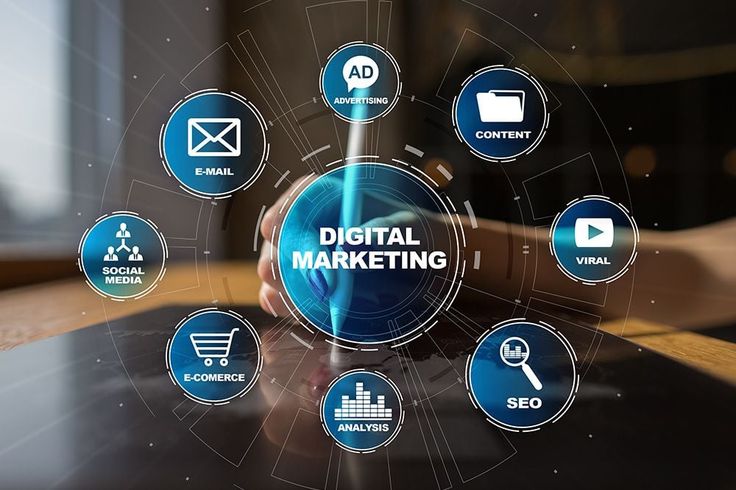
How digital marketing works end-to-end - SEO, paid ads, content, social media, email, analytics. You don't need to be an expert. You need to understand how they connect.
Google Analytics 4 - Reading traffic data, understanding user behaviour, interpreting campaign results.
Basic copywriting - Writing a headline, a caption, an ad - clearly and compellingly. Every marketing role needs this.
One social media platform deeply - Know how its algorithm works, what content performs, and how to grow an audience on it.
Pick One Specialisation to Go Deep On
Once you have the basics, pick one of these to go deep on before you apply for jobs:
Performance Marketing - Google Ads, Meta Ads, campaign optimisation, ROAS. Highest-paying entry point.
SEO - Keyword research, on-page optimisation, content strategy, GEO. Strong organic career path.
Content Marketing - Blog writing, video scripting, social content, content calendars. Most accessible entry point.
Social Media Management - Platform strategy, community management, short-form video. High demand across brand and agency roles.
Marketing Analytics - GA4, Looker Studio, data reporting. Highest salary ceiling at senior levels.
You can become job-ready within 3–6 months with proper guidance, hands-on training, and real project exposure - regardless of your previous background. (IIDE, 2025)
Step-by-Step: How to Switch Careers to Digital Marketing
Step 1: Accept That You're Starting Over - Partially
You're not starting from zero. You're starting with context from your previous career that most freshers don't have. Your job is to layer digital marketing skills on top of what you already know and have achieved - not erase everything and start again.
Identify the overlap between what you did before and what digital marketing needs. That overlap is your unique positioning when you apply for jobs.
Step 2: Learn the Fundamentals First (2–4 Weeks)
Before specialising, get a working understanding of how digital marketing functions as a whole. Free resources that are actually worth your time:
Google Digital Garage - Free, structured, covers the basics well
HubSpot Academy - Content marketing, inbound, email fundamentals
Meta Blueprint - Social media and paid ads on Facebook and Instagram
Google Analytics 4 Certification - Free and credible
Spend 30–45 minutes a day here. Don't rush. Build the plan and roadmap before you go deep.
Step 3: Pick Your Specialisation and Go Deep (4–8 Weeks)
Based on your background and interests, pick one specialisation from the list above. Then go deep - not just theory, but tools, real use cases, and practice.
If you were in sales → Performance Marketing is the fastest crossover. If you were in writing or teaching → Content Marketing or SEO. If you were in finance or data → Marketing Analytics. If you were in design → Social Media or Brand Content.
Step 4: Build Real Proof - Not Just Certificates
This is the step most people skip - and it's the one that matters most.
A candidate who managed a small business's social media for three months, grew followers, increased engagement, and can explain their strategy will always be hired over someone with only theoretical knowledge and certificates.
Here's how to build proof with no clients and no prior experience:
Start a personal project - a blog, an Instagram page, a YouTube channel around something you're genuinely interested in. Grow it intentionally using what you've learned.
Offer free or low-cost help - a local business, an NGO, a friend's startup. Manage their social media or run a small ad campaign for them. Document everything.
Recreate real campaigns - pick a brand you admire and build a mock content calendar, a paid ads strategy, or an SEO plan. Show your thinking, strategy, ideas behind it - not just the output.
Step 5: Get Into a Structured Learning Environment
Self-learning will take you to a point - but the gap between "knows digital marketing" and "can do result-driven digital marketing professionally" is closed fastest through structured, practical learning.
LIT School's Creator Marketer Programme in Bangalore is built specifically for this. Over 12 months, students work on 50–100+ real brand briefs - not simulations, but actual challenges from real companies. You work in a cohort of 50, get feedback from working industry professionals, and finish with a 3-month paid internship already on your resume.
For career switchers especially, this is significant - because you enter the programme with your previous skills and experience, and leave with a documented portfolio of marketing work that proves you can do the job.
Explore the Creator Marketer Programme →
Step 6: Update Your LinkedIn and Resume for Marketing
Your previous experience isn't irrelevant - it needs to be reframed.
Rewrite your headline to reflect your new direction: "Career Switcher → Digital Marketer | Content & SEO | Previously in [Field]"
Highlight transferable skills from past roles using marketing language
Add every certification, project, and result to your profile
Start posting content on LinkedIn - sharing what you're learning, what you're building, and what you're noticing about the industry. This builds credibility in public.
Step 7: Apply Smart - Not Everywhere
Don't apply for roles you're not yet ready for. Target:
Junior or Associate roles at startups and digital agencies
Internships - even short paid ones that convert to full-time
Freelance projects through your personal network or platforms like Internshala and Upwork
Be honest in interviews about being a career switcher - and lead with your portfolio, your transferable skills, and your ability to learn fast. Most hiring managers respect that combination.
Common Mistakes to Avoid
Collecting certificates without doing real work - certifications help, but they don't replace real proof of work. Build first, certify second.
Trying to learn everything at once - pick one specialisation, go deep, then expand. Depth beats breadth at the start.
Applying before your portfolio is ready - one strong project beats ten applications with an empty portfolio.
Expecting a lateral salary jump immediately - most career switchers take a small pay cut initially and recover it within 1–2 years. Plan for this rather than being surprised by it.
Underestimating how long it takes - the switch takes 6–12 months, depending on the person - it takes a good amount of focused effort.
Conclusion
Switching careers to digital marketing is one of the most accessible, well-paying, and genuinely achievable career moves in India in 2026.
You don't need a marketing degree. You don't need years of experience. You need a clear plan, the right specialisation, real proof of work, and the patience to execute - not shortcuts.
The field rewards people who can show results. Your job is to become someone who can - and then show it.
If you want to compress the timeline and get there with real brand experience, mentorship, and a structured path, LIT School's Creator Marketer Programme is worth exploring.
Got questions about making the switch? Drop them in the comments.
FAQs
Q1: Can I switch to digital marketing without any prior experience?
Yes - digital marketing is one of the few fields where skills and portfolio matter more than experience. Build proof of work through personal projects and you're hireable. (Adwen Plus, 2026)
Q2: Which digital marketing specialisation is best for career switchers?
It depends on your background - sales professionals suit performance marketing, writers suit content and SEO, finance professionals suit analytics. Start from your existing strengths.
Q3: How long does it take to switch careers to digital marketing in India?
With focused effort, most people land their first role within 6–12 months - faster with a structured programme that includes real project work and mentorship. (IIDE, 2025)
Q4: Will I have to take a salary cut when switching to digital marketing?
Most career switchers take a small cut initially, but recover it within 1–2 years as skills compound - especially with a strong portfolio and a specialised skill set.
Q5: Do I need a degree or certification to get a digital marketing job in India?
No degree required - employers prioritise a strong portfolio and demonstrable skills. Free certifications from Google and HubSpot add credibility but don't replace proof of real work.


